Your Phone Wallet Is a Single Point of Failure
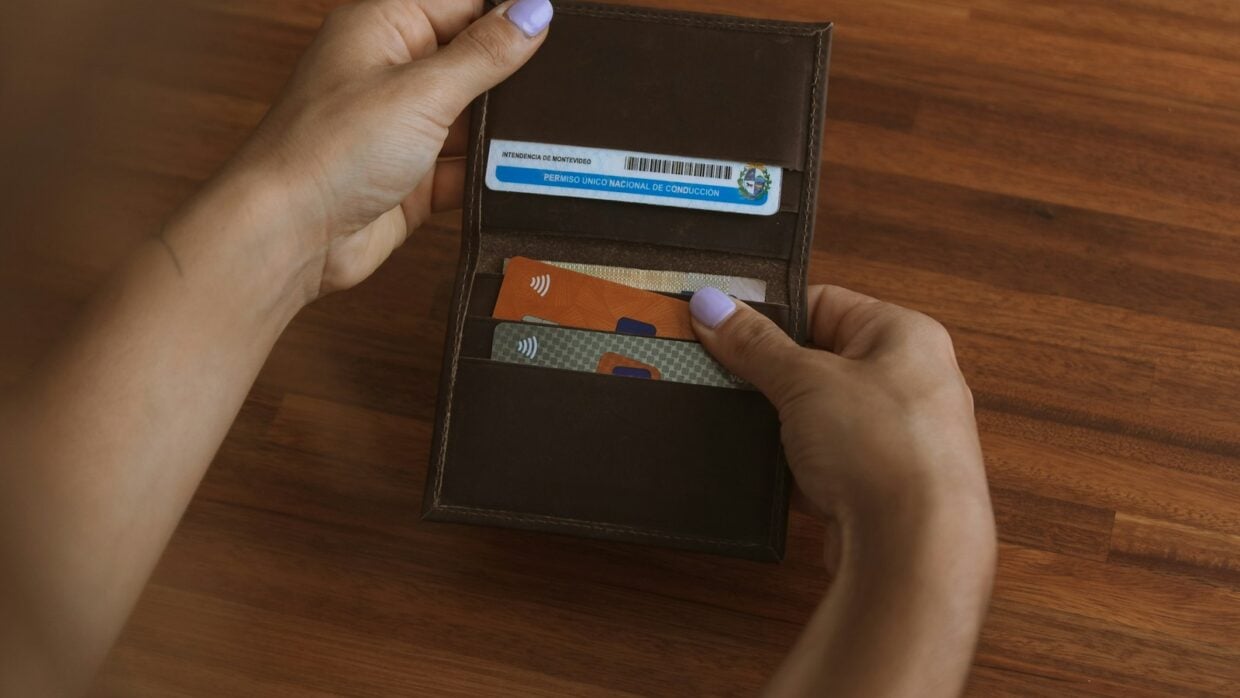
Attaching a card wallet to the back of your phone is convenient in the way that keeping your house key under the mat is convenient.
It solves a small daily annoyance and creates one larger problem: everything you would need to recover from a theft is now in the thing being stolen.
The single-point-of-failure problem
Think about what a stolen phone costs you when your cards are attached to it.
Your bank cards are gone, so you cannot pay for a taxi home or a replacement handset. If your ID is in there, you cannot prove who you are to the bank. And your phone is gone, so you cannot receive the verification codes the bank will send to confirm it is you.
That last one is the part people miss. Two-factor authentication assumes your phone and your cards are in different pockets. Magnetic wallets quietly break that assumption.
Separately, the wallet attaches magnetically. It detaches the same way — in a bag, on a car seat, or when someone in a crowd brushes past you.
What actually gets stolen
Phone theft is rarely about the handset. Resale value is limited once a device is locked and reported. The valuable part is what the phone unlocks: banking apps, email, the codes that reset every other password you own.
Adding physical cards to that bundle hands over the remaining piece — the account numbers — without any of the friction a thief would otherwise face.
A thief with your phone has a problem to solve. A thief with your phone and your cards has a head start.
If you want the convenience anyway
This is a reasonable trade to make deliberately. Made deliberately, it is manageable.
Keep one card in the wallet, not the set. Ideally one with a low limit, and never the account holding your savings.
Keep your ID somewhere else. Losing a card is an inconvenience. Losing a card together with a document proving your name and address is the combination that enables identity fraud.
Use an authenticator app rather than SMS codes. If the codes live in an app protected by biometrics, a stolen phone is far less useful.
Turn on the manufacturer’s theft protection features. Both major platforms now offer settings that lock sensitive apps when the device behaves as though it has been snatched.
Know your remote wipe process before you need it. Practise it once, from a computer, so you are not learning it in a panic.
Check the magnet strength honestly. A weak attachment is a lost wallet waiting to happen, and cheap wallets detach more easily than the cases they stick to.
Who should skip it entirely
If you carry ID you cannot quickly replace, keep it separate. The replacement process is the punishment, not the loss itself.
If you rely on SMS codes for banking, your phone is already a single point of failure. Do not add the cards to it.
If you travel in crowded places regularly, magnetic attachments and crowds are a poor combination.
If you would struggle to prove your identity without the documents in that wallet, that is exactly the scenario to avoid creating.
💳 Compare Wallet and Case Designs
The short version
Phone wallets are convenient and the convenience is real. The cost is that a single theft takes your payment methods, your identity documents and your means of proving who you are, all at once.
One low-limit card, no ID, an authenticator app rather than SMS codes, and a remote wipe process you have actually tested. That keeps most of the convenience and removes most of the risk.